
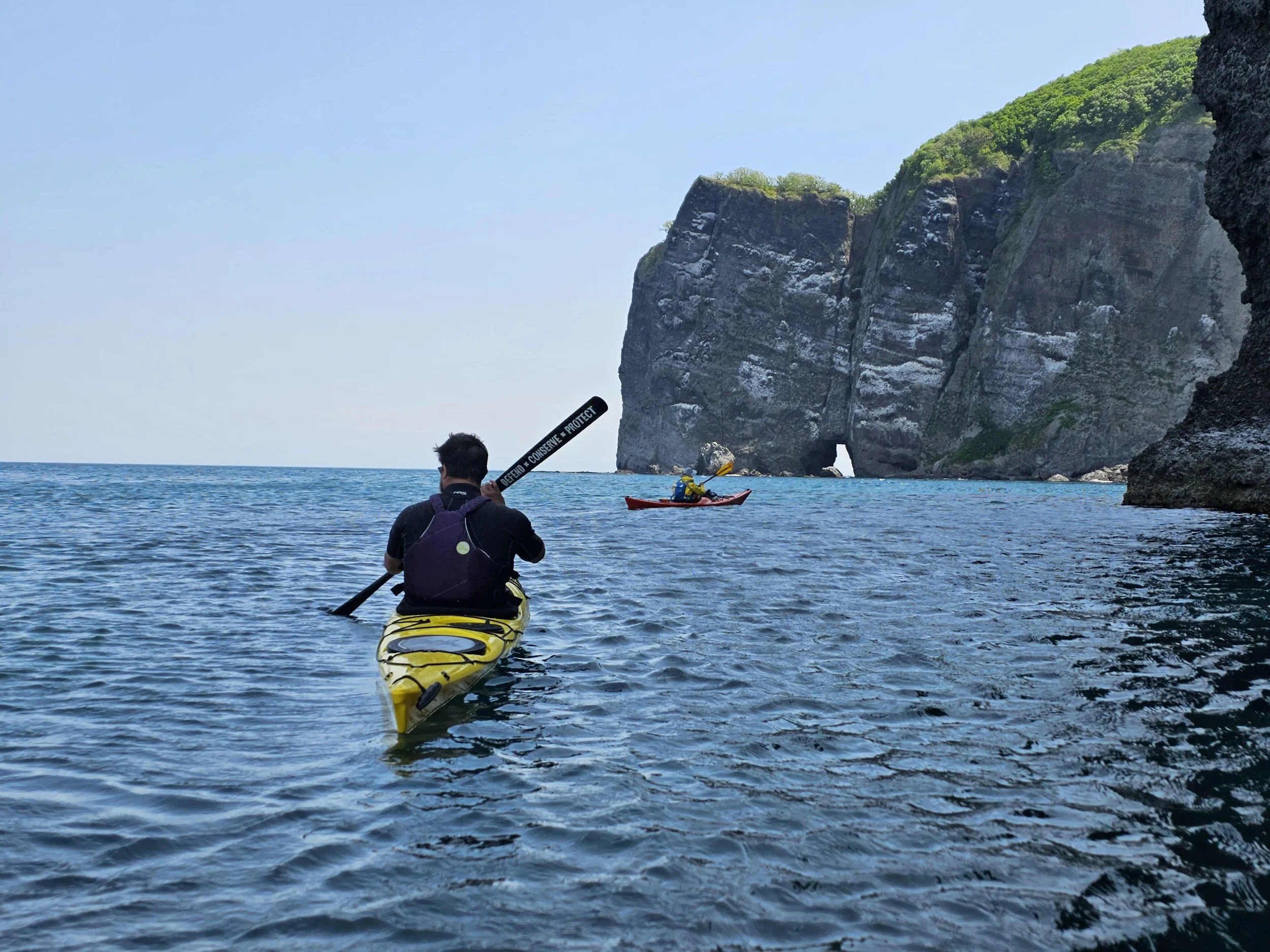
Custom Private Hokkaido Tour — Built Around You
Custom programs are where we slow things down, ask better questions, and build something that actually fits — the people, the season, the conditions, and the realities on the ground. Done right, the planning itself is part of the adventure.
This path is for clients who want more than an off-the-shelf experience and understand that good outcomes come from clarity up front, not rushed decisions. The same disciplined approach that supports private clients also scales to institutional, commercial, and government-facing work. Thoughtful planning makes the experience smoother, safer, and a lot more fun once it’s time to play.

Legal・Legit・Local™
Asobi Master® is a Higashikawa-based private guide.
Legal — Operated through 北海道国際アドベンチャーマスターズ株式会社 (Hokkaido International Adventure Masters Co., Ltd.), a registered Japanese company, with unrestricted work authorization under Japanese immigration law.
Legit — Native English-speaking guide and instructor holding AAI Professional Level 1 (avalanche) and WMAI Instructor certification (Wilderness EMT Certified).
Local — Programs run locally on Asahidake, in Asahikawa, and across Hokkaido.
Comparing a private ski day or a custom Hokkaido adventure? Book the operator you can verify: a local company, named credentials, and a real address in Japan.
What a Custom Program Is (and Isn’t)
Custom programs are designed to scale — from highly personal, one-off experiences for discerning private clients to structured, contract-driven engagements for organizations, agencies, and institutional partners. This includes work with clients operating under formal vendor onboarding, compliance, and contracting requirements, where clarity, documentation, and operational discipline matter.
A custom program is:
Purpose-built around your goals, experience level, timing, and conditions
Led by professional guiding with conservative, experience-based decision-making
Planned with local knowledge and realistic constraints, including regulatory, environmental, safety, and operational considerations
A custom program is not (and this is important):
A guaranteed outcome regardless of conditions
A placeholder while details are “figured out later”
A travel package sold without context, communication, or clear boundaries

Who Custom Programs Are Best For
Custom programs are appropriate for a wide range of clients and partners, from private individuals to organizations operating under formal requirements.
Custom programs tend to work best for:
Individuals or small groups with specific goals
Clients comfortable with flexible planning in dynamic environments
Travel partners, agencies, and organizations seeking locally grounded, professionally guided experiences
Institutional, corporate, or government-affiliated clients requiring clear scope definition, written agreements, and disciplined risk management
If this sounds like you, start with the custom program inquiry form and we’ll take it from there. We’ll handle the serious details so you can focus on the fun part — actually getting out there.
How the Custom Program Process Works
The process below is intentionally structured to support both individualized client experiences and formal procurement, contracting, and compliance requirements when needed.
1. Initial inquiry (Free)
Start with the custom program inquiry form. This provides enough information to determine whether your idea is realistic, appropriate, and a good fit.
2. Intake review
If the request is straightforward, we may be able to move directly to confirmation. If it’s complex, time-sensitive, or open-ended, the next step is a consultation.
3. Paid consultation (when required)
Some custom programs require a scheduled consultation with the “Fun Boss.” This is most common when requests involve multiple variables, tight timelines, or significant planning. Consultations are paid in advance and replace long back-and-forth messaging with focused, professional planning. Think of it as sitting down with the Fun Boss to turn a rough idea into a solid, realistic adventure plan.
If you proceed with a booking that stems from the consultation, the consultation fee is credited toward your overall program invoice. Consultations are not a sales call — they are structured planning time. Final decisions remain grounded in safety, conditions, and professional judgment.
This keeps planning fair, protects availability during peak seasons, and ensures confirmed clients aren’t subsidizing extensive unpaid planning time — while keeping the process efficient and genuinely enjoyable for everyone involved.
4. Planning boundaries (important)
Custom planning is real work — and it can also be one of the most enjoyable parts of the process. Before a contract is issued, communication is intentionally kept lightweight: typically 60–90 minutes total (or 2–3 focused emails) to confirm fit, feasibility, and direction.
If you want deeper design work (route logic, detailed sequencing, contingency planning, multiple options, coordination across variables), this moves into a paid planning step. This is where ideas get stress-tested, sharpened, and turned into something you can be excited about. That planning fee may be credited toward your final invoice if you book.
Scope changes, added complexity, or repeated revisions require additional planning time and cost.
5. Written service contract
All custom programs — from private engagements to institutional or government-supported work — are governed by a written service contract (or rental agreement) appropriate to the scope and operating entity.
Once scope, timing, and terms are aligned, you’ll receive a written service contract (or rental agreement). Pricing is inclusive and not itemized — this avoids a la carte shopping and reflects the reality that guiding, judgment, preparation, risk management, and coordination are the product. The value isn’t in individual line items; it’s in how everything works together.
Deliverable details remain high level until contracted services are in place. This protects safety, intellectual property, and operational integrity while allowing sufficient information for internal review, approval, or procurement processes. After contracting, you’ll receive the appropriate level of detail for safe execution.
All financial, cancellation, and participation terms are provided in writing before payment is requested.
6. Payment and confirmation
To keep things clean and fair, custom programs are confirmed only when the contract is in place and payments are received. During peak seasons, multiple inquiries may be active in parallel, so confirmations are handled on a first-confirmed basis, not a first-message basis.
Payment is handled through one of two pathways, depending on whether you’re booking as an individual /private group or as an institutional partner.
Pathway A — Individual / Private Clients
Upfront payment (standard): The bulk of payment is collected before planning time, calendar scheduling, resource allocation, or deferring other parallel inquiries.
Written contract: Issued before payment is requested.
Confirmation: Services are confirmed only once payment is received and the contract is in place.
Optional true-up: If approved scope changes occur during delivery, a final true-up invoice may be used.
Pathway B — Institutional / Organizational Clients
Upfront deposit / planning retainer: Secures the calendar window and starts planning time.
Scheduled main payment (bulk): Collected on an agreed date before delivery to lock in operational commitments.
Final true-up invoice: Used to tidy up any approved scope or deliverable adjustments that occur during delivery.
Either way, the principle is the same: the bulk of payment happens prior to planning, resource allocation, calendar scheduling, or deferring other parallel inquiries. This structure keeps expectations clear and operations workable across all client types.
Pricing remains inclusive (not itemized), and any scope changes that impact time, risk, or deliverables require written approval and may require additional planning time and cost.
An inquiry is not a reservation.
Availability, pricing, and scope may change until confirmed in writing.
Participants are responsible for honestly representing their experience level, fitness, and objectives during the intake process.
Safety, conditions, and operational viability are assessed by the guide, consistent with professional guiding standards — not determined solely by forecasts, apps, or third-party reports.
Transportation is incidental to the guided experience. Asobi Master® provides guiding and coordination services only; travel arrangements are contracted separately where applicable.
Planning materials, program concepts, and operating methods are proprietary. Intellectual property remains with Asobi Master® unless otherwise agreed in writing.
Important Notes

Legal Legit Local™ guides how custom programs are designed and delivered — ensuring work is compliant, defensible, and appropriate whether serving individual clients or operating within formal institutional frameworks.
PLAY・毎日・EVERY・遊ぶ・DAY™ reminds us why we’re doing this in the first place.